
BPC-157 + TB-500 (10 mg Blend) Dosage Protocol
- Table of Contents
- BPC-157 + TB-500 Dosage Chart
- Dosing & Reconstitution Guide
- Standard / Gradual Approach (3 mL = ~3.33 mg/mL)
- Reconstitution Steps
- Advanced / Aggressive Approach (Acute Injury Support)
- Supplies Needed
- Protocol Overview
- Dosing Protocol
- Storage Instructions
- Important Notes
- How This Works
- Potential Benefits & Side Effects
- Lifestyle Factors
- Injection Technique
- Important Note
- References
- Additional Research and Background
BPC-157 + TB-500 Dosage Chart
The BPC-157 + TB-500 peptide blend is dosed at 600 mcg–800 mcg daily via subcutaneous injection in educational protocols. A 10 mg blend reconstituted with bacteriostatic water yields about 3.33 mg/mL. This information is for research and educational use only.
- Reconstitute: Add 3.0 mL bacteriostatic water → 3.33 mg/mL total concentration (1.67 mg/mL of each peptide).
- Typical daily range: 600–1000 mcg total blend once daily (provides 300–500 mcg of each peptide).
- Easy measuring: At 3.33 mg/mL, 1 unit = 0.01 mL ≈ 33.3 mcg total blend on a U-100 insulin syringe.
- Storage: Lyophilized: freeze at −20 °C (−4 °F); after reconstitution, refrigerate at 2–8 °C (35.6–46.4 °F); avoid freeze–thaw cycles.
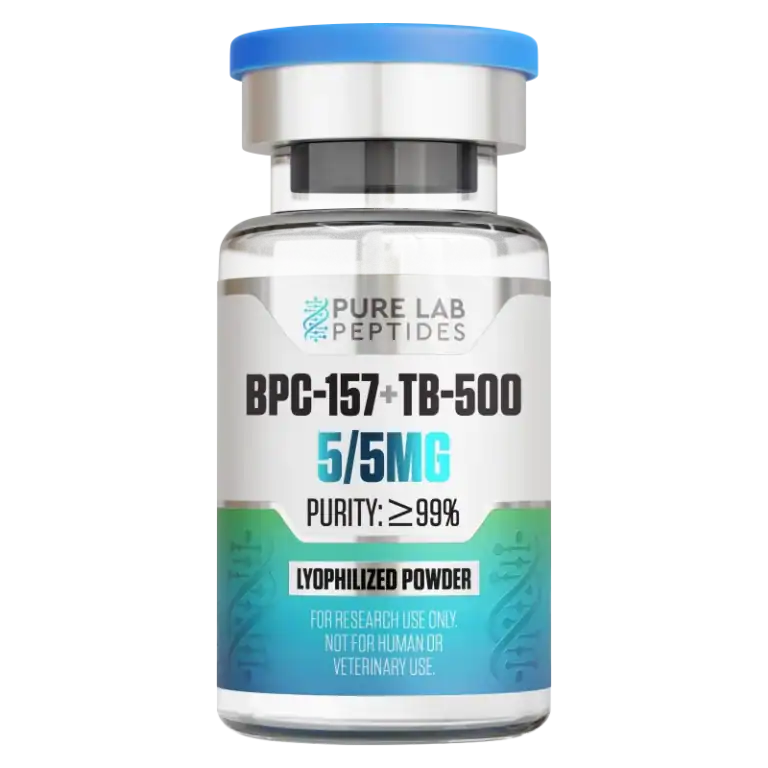
This blend combines two well-studied regenerative peptides: BPC-157 (Body Protection Compound-157), a pentadecapeptide derived from human gastric juice with cytoprotective and wound-healing properties[1][2], and TB-500 (Thymosin Beta-4 fragment), a 43-amino-acid peptide involved in tissue repair, cell migration, and angiogenesis[3][4]. This educational protocol presents a once-daily subcutaneous approach using a practical dilution for clear insulin-syringe measurements.
Related research: For distinct compound, component, or formulation evidence and safety context, read BPC-157 Peptide: Benefits, Uses, Side Effects, Dosage, and Research and TB-500 Peptide: Benefits, Uses, Side Effects, Dosage, and Research. These links are comparisons only; the compounds and formulations should not be treated as interchangeable.
Dosing & Reconstitution Guide
Educational guide for reconstitution and daily dosing
Standard / Gradual Approach (3 mL = ~3.33 mg/mL)
Phase / Week
Daily Dose (Total Blend)
Each Peptide (mcg)
Units (mL)
Weeks 1–2 (Initial)
600 mcg
300 mcg BPC + 300 mcg TB-500
18 units (0.18 mL)
Weeks 3–4 (Loading)
800 mcg
400 mcg BPC + 400 mcg TB-500
24 units (0.24 mL)
Weeks 5–8 (Maintenance)
600 mcg
300 mcg BPC + 300 mcg TB-500
18 units (0.18 mL)
Frequency: Inject once daily subcutaneously. This schedule uses 3.0 mL dilution to keep per-injection volumes ≥18 units for accurate measurement. Rotate injection sites systematically[7].
Reconstitution Steps
- Draw 3.0 mL bacteriostatic water with a sterile syringe.
- Inject slowly down the vial wall; avoid foaming or vigorous shaking.
- Gently swirl/roll until fully dissolved (do not shake).
- Label with date and refrigerate at 2–8 °C (35.6–46.4 °F), protected from light.
Advanced / Aggressive Approach (Acute Injury Support)
Phase / Week
Daily Dose (Total Blend)
Each Peptide (mcg)
Units (mL)
| Weeks 1–2 (Aggressive Load) | 1000 mcg | 500 mcg BPC + 500 mcg TB-500 | 30 units (0.30 mL) |
| Weeks 3–4 (High Load) | 800 mcg | 400 mcg BPC + 400 mcg TB-500 | 24 units (0.24 mL) |
| Weeks 5–8 (Maintenance) | 600 mcg | 300 mcg BPC + 300 mcg TB-500 | 18 units (0.18 mL) |
Note: A small human case series combining BPC-157 and TB-500 for joint injuries reported improved outcomes at higher combined doses (4 mg BPC + 6 mg TB-500 intra-articular) compared to lower doses[8]. However, systemic subcutaneous protocols typically use the ranges above. Treatment duration is generally limited to 8–12 weeks before cycling off to evaluate response[9].
Important: This guide is for educational purposes only and is not medical advice. For research use only. Not for human consumption.
Supplies Needed
Plan based on an 8–16 week daily protocol with phased dosing (averaging ~700 mcg/day over the cycle).
- Peptide Vials (BPC-157 + TB-500, 10 mg blend each):
- 8 weeks ≈ 4 vials
- 12 weeks ≈ 6 vials
- 16 weeks ≈ 8 vials
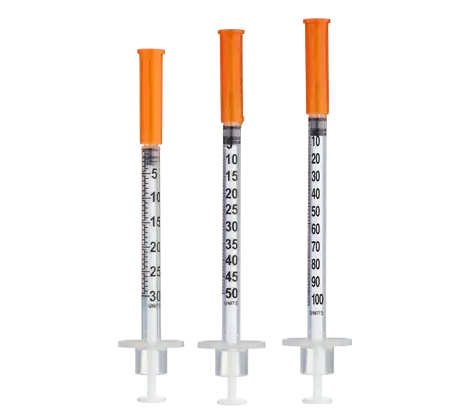
- Insulin Syringes (U-100):
- Per week: 7 syringes (1/day)
- 8 weeks: 56 syringes
- 12 weeks: 84 syringes
- 16 weeks: 112 syringes
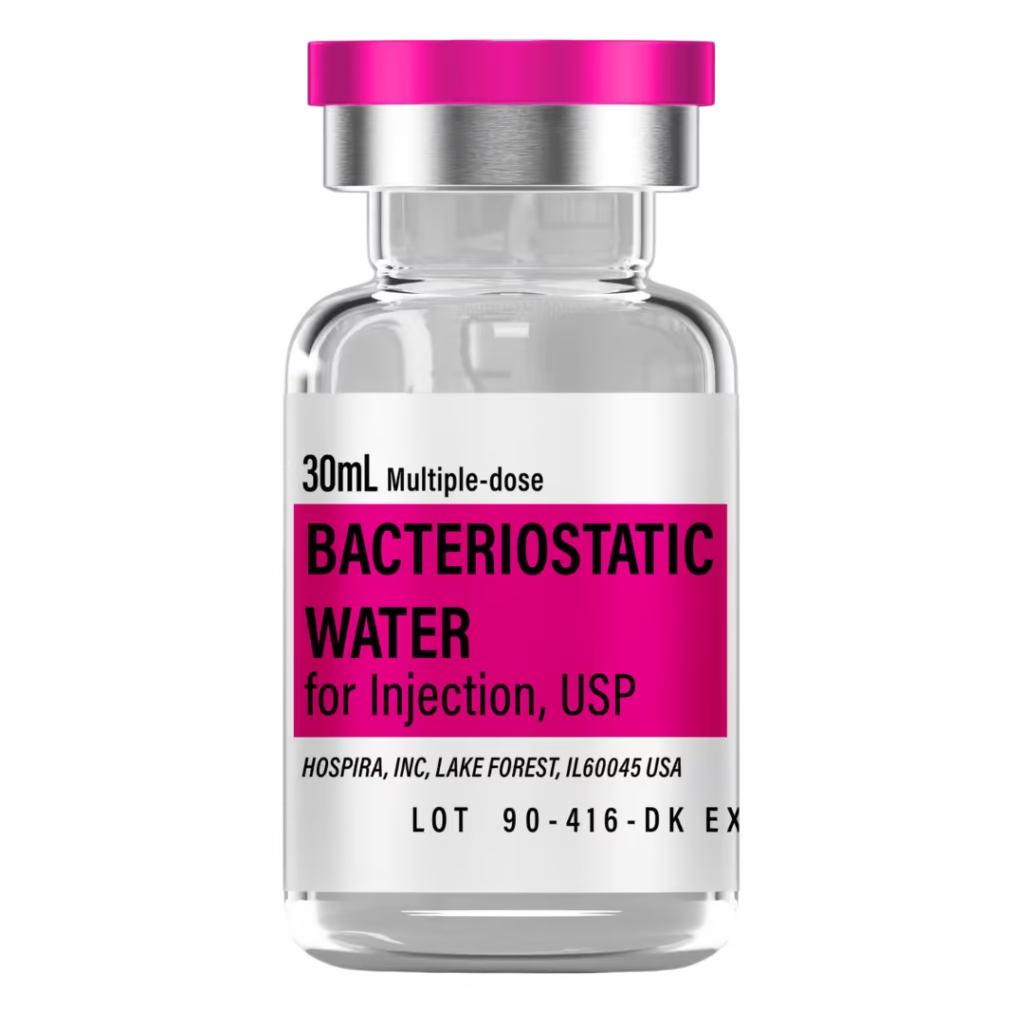
- Bacteriostatic Water (10 mL bottles): Use 3.0 mL per vial for reconstitution.
- 8 weeks (4 vials): 12 mL → 2 × 10 mL bottles
- 12 weeks (6 vials): 18 mL → 2 × 10 mL bottles
- 16 weeks (8 vials): 24 mL → 3 × 10 mL bottles
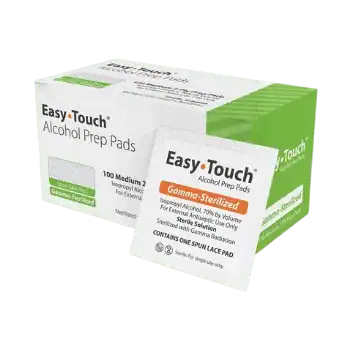
- Alcohol Swabs: One for the vial stopper + one for the injection site each day.
- Per week: 14 swabs (2/day)
- 8 weeks: 112 swabs → recommend 2 × 100-count boxes
- 12 weeks: 168 swabs → recommend 2 × 100-count boxes
- 16 weeks: 224 swabs → recommend 3 × 100-count boxes
Protocol Overview
Concise summary of the once-daily regimen.
- Goal: Support tissue repair, wound healing, and recovery from musculoskeletal injuries[1][3].
- Schedule: Daily subcutaneous injections for 8–12 weeks (extend to 16 weeks if needed).
- Dose Range: 600–1000 mcg total blend daily (300–500 mcg of each peptide).
- Reconstitution: 3.0 mL per 10 mg vial (~3.33 mg/mL) for accurate unit measurements.
- Storage: Lyophilized frozen; reconstituted refrigerated; avoid repeated freeze–thaw.
Dosing Protocol
Suggested daily phased approach.
- Start: 600 mcg total daily (300 mcg each peptide) for Weeks 1–2.
- Loading: Increase to 800 mcg daily for Weeks 3–4.
- Maintenance: Return to 600 mcg daily for Weeks 5–8+.
- Frequency: Once per day (subcutaneous).
- Cycle Length: 8–12 weeks; optional extension to 16 weeks.
Storage Instructions
Proper storage preserves peptide quality and stability.
- Lyophilized: Store at −20 °C (−4 °F) in dry, dark conditions; minimize moisture exposure.
- Reconstituted: Refrigerate at 2–8 °C (35.6–46.4 °F); use within 4–6 weeks; avoid freeze–thaw.
- Allow vials to reach room temperature before opening to reduce condensation uptake.
Important Notes
Practical considerations for consistency and safety.
- Both peptides are not approved for routine human use (sold for research purposes) and are banned in competitive sports[10].
- Use new sterile insulin syringes for each injection; dispose in a sharps container.
- Rotate injection sites (abdomen, thighs, upper arms) to reduce local irritation[7].
- Inject slowly; wait a few seconds before withdrawing the needle.
- Document daily dose and site rotation to maintain consistency
How This Works
BPC-157 is a stable pentadecapeptide that promotes angiogenesis, modulates nitric oxide pathways, and demonstrates broad cytoprotective effects across gastrointestinal, musculoskeletal, and neurological tissues in preclinical models[1][2]. It has shown activity at very low doses (nanogram to microgram per kilogram) without demonstrable toxicity in animal studies[11].
TB-500 (Thymosin Beta-4) is an actin-sequestering peptide that promotes cell migration, wound healing, and anti-inflammatory responses[3][4]. It is well-tolerated in animal and early clinical studies, even at multi-milligram doses[12].
Combining these peptides may provide complementary mechanisms for tissue repair: BPC-157 for its trophic and anti-inflammatory effects, and TB-500 for enhanced cell migration and angiogenesis[8].
Potential Benefits & Side Effects
Observations from preclinical and limited clinical literature.
- May support accelerated healing of tendons, ligaments, muscles, and soft tissue injuries[1][5].
- Preclinical evidence suggests gastroprotective and anti-inflammatory properties for BPC-157[2].
- TB-500 promotes wound healing and may reduce scarring through enhanced cell migration[3].
- Both peptides are generally well tolerated; occasional mild injection-site reactions (redness, itching) may occur with subcutaneous administration.
- No significant toxicity has been documented up to high doses in animal studies[11][12].
Lifestyle Factors
Complementary strategies for optimal recovery outcomes.
- Prioritize adequate protein intake (1.6–2.2 g/kg body weight) to support tissue repair.
- Follow appropriate rehabilitation protocols for any injuries being addressed.
- Ensure adequate sleep (7–9 hours) to optimize recovery and tissue regeneration.
- Manage inflammation through balanced nutrition and stress reduction techniques.
Injection Technique
General subcutaneous guidance from clinical best-practice resources[6][7].
- Clean the vial stopper and skin with alcohol; allow to dry completely.
- Pinch a skinfold; insert the needle at 45–90° into subcutaneous tissue[13].
- Do not aspirate for subcutaneous injections; inject slowly and steadily[13].
- Rotate sites systematically (abdomen at least 2 inches from navel, thighs, upper arms, flank) to avoid lipohypertrophy[7].
- Apply gentle pressure post-injection; do not rub the site.
Important Note
This content is for educational purposes only and is not medical advice.
References
PubMed
— Preclinical safety evaluation of body protective compound-157, a potential drug for treating various wounds
Current Pharmaceutical Design (PubMed)
— Stable gastric pentadecapeptide BPC-157: novel therapy in gastrointestinal tract
PMC
— Utilizing developmentally essential secreted peptides such as Thymosin Beta-4 for regenerative therapies
PMC
— Emerging use of BPC-157 in orthopaedic sports medicine: a systematic review
Bachem
Handling and storage guidelines for peptides (lyophilized stability)
Johns Hopkins Arthritis Center
— How to give a subcutaneous injection
PMC
— Subcutaneous drug delivery review: pharmacologic considerations
ASIPP / Alternative Therapies in Health and Medicine
— Intra-articular injection of BPC-157 for multiple types of knee pain
A4M
— Thymosin Beta-4 professional monograph
PubMed
— Detection of thymosin beta-4 and related peptides in sport drug testing
Journal of Physiology and Pharmacology (PubMed)
— BPC-157 activity at very low doses without toxicity in animal studies
Expert Opinion on Biological Therapy (PubMed)
— Thymosin beta-4 and its role in wound healing
CDC
— Vaccine administration: subcutaneous route (angle/site; no aspiration)
Additional Research and Background
These sources provide related context and are not presented as support for a specific statement above.
NCBI Bookshelf
— Best practices for injection (asepsis, preparation, and administration)
Related research, protocols, and guides
Explore the available research context, protocol variants or comparisons, and practical guides. When vial-size variants exist, they remain separate because vial strength, concentration, and syringe-unit calculations can differ. Related compounds and blends are comparisons only, not interchangeable.
Related protocols and comparisons
Evidence: Dosing and safety sources are linked·Editorial standards & corrections