
Thymosin Alpha-1 (10 mg Vial) Dosage Protocol
- Table of Contents
- 5-Amino-1MQ Dosage Chart
- Dosing & Reconstitution Guide
- Subcutaneous Protocol (2 mL = 5 mg/mL)
- Reconstitution Steps
- Supplies Needed
- Protocol Overview
- Dosing Protocol
- Storage Instructions
- Important Notes
- How This Works
- Potential Benefits & Side Effects
- Lifestyle Factors
- Injection Technique
- References
- Additional Research and Background
Thymosin Alpha-1 Dosage Chart
Thymosin Alpha-1 is dosed at 300 mcg–500 mcg daily via subcutaneous injection in educational protocols. A 10 mg vial reconstituted with bacteriostatic water yields about 3.33 mg/mL. This information is for research and educational use only.
- Reconstitute: Add 3.0 mL bacteriostatic water → ~3.33 mg/mL concentration.
- Typical daily range: 300–500 mcg once daily (gradual titration).
- Easy measuring: At 3.33 mg/mL, 1 unit = 0.01 mL ≈ 33.3 mcg on a U‑100 insulin syringe.
- Storage: Lyophilized: refrigerate at 2–8 °C (35.6–46.4 °F) or freeze at −20 °C (−4 °F); after reconstitution, refrigerate and use within 7 days.
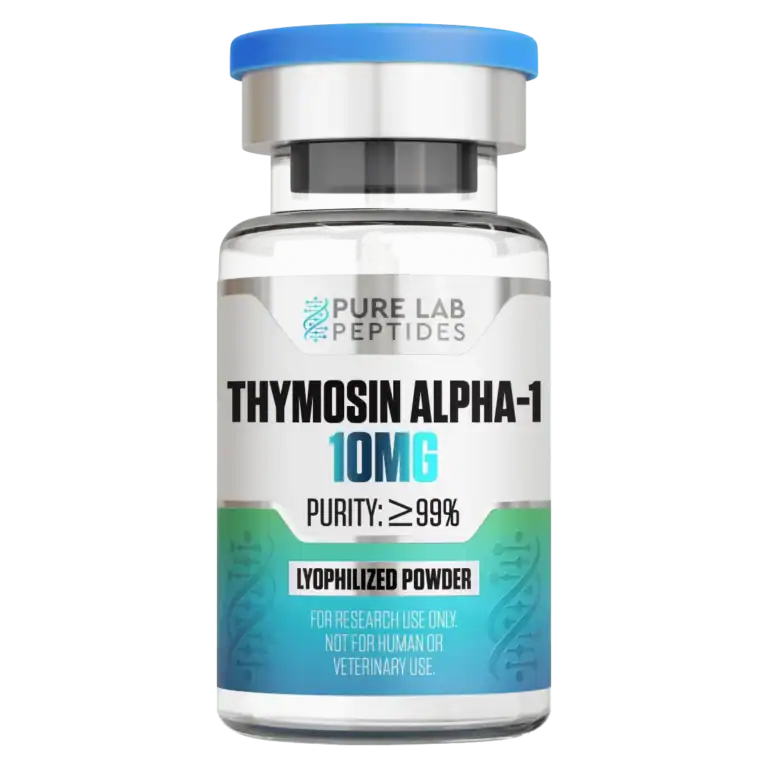
Thymosin Alpha-1 (Tα1) is a 28–amino acid peptide originally isolated from the thymus gland, recognized for its broad immunomodulatory properties[1]. It has been investigated as an immune enhancer in chronic viral infections (hepatitis B/C, HIV/AIDS) and critical illness (sepsis, COVID-19)[2][3]. This educational protocol presents a once‑daily subcutaneous approach using a practical dilution for clear insulin‑syringe measurements.
Research context: For evidence on mechanisms, human and preclinical research, limitations, and safety, read Thymosin Alpha-1 Peptide: Benefits, Uses, Side Effects, Dosage, and Research.
Dosing & Reconstitution Guide
Standard / Gradual Approach (3 mL = ~3.33 mg/mL)
CJC-1295 DAC (2 mg Vial) — Weekly Subcutaneous
Week
Daily Dose (mcg)
Units (per injection) (mL)
Week 1
300 mcg (0.3 mg)
9 units (0.09 mL)
Weeks 2–8
500 mcg (0.5 mg)
15 units (0.15 mL)
Frequency: Inject once daily subcutaneously. This 8‑week protocol begins at 300 mcg to assess tolerance, then increases to a maintenance dose of 500 mcg daily from Week 2 onward. The 500 mcg daily dose yields ~3.5 mg/week, consistent with clinical dosing ranges[4][5]. Treatment durations of 8–16 weeks are commonly reported in literature.
For ≤10‑unit (≤0.10 mL) administrations, consider 30‑ or 50‑unit insulin syringes for improved readability.
Reconstitution Steps
- Draw 3.0 mL bacteriostatic water with a sterile syringe.
- Inject slowly down the vial wall; avoid foaming.
- Gently swirl/roll until dissolved (do not shake).
- Label with reconstitution date and refrigerate at 2–8 °C (35.6–46.4 °F), protected from light.
Important: This guide is for educational purposes only and is not medical advice.
Supplies Needed
Plan based on an 8–16 week daily protocol with gradual titration.
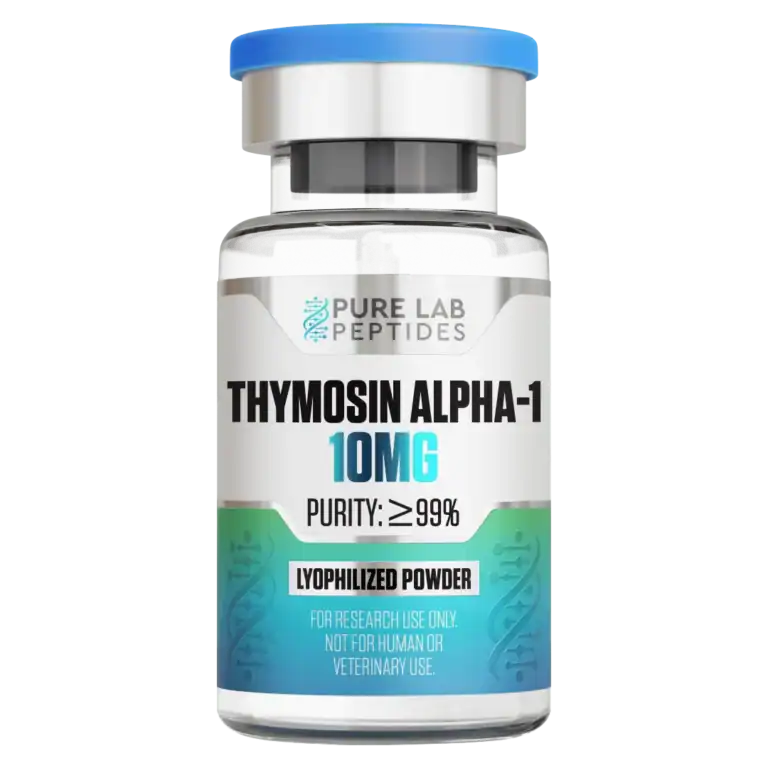
- Peptide Vials (Thymosin Alpha-1, 10 mg each):
- 8 weeks ≈ 3 vials (26.6 mg total)
- 12 weeks ≈ 5 vials (40.6 mg total)
- 16 weeks ≈ 6 vials (54.6 mg total)
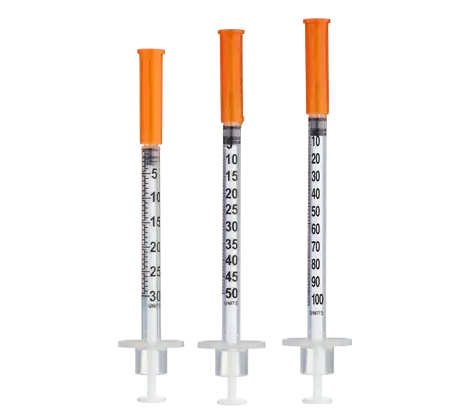
- Insulin Syringes (U‑100):
- Per week: 7 syringes (1/day)
- 8 weeks: 56 syringes
- 12 weeks: 84 syringes
- 16 weeks: 112 syringes
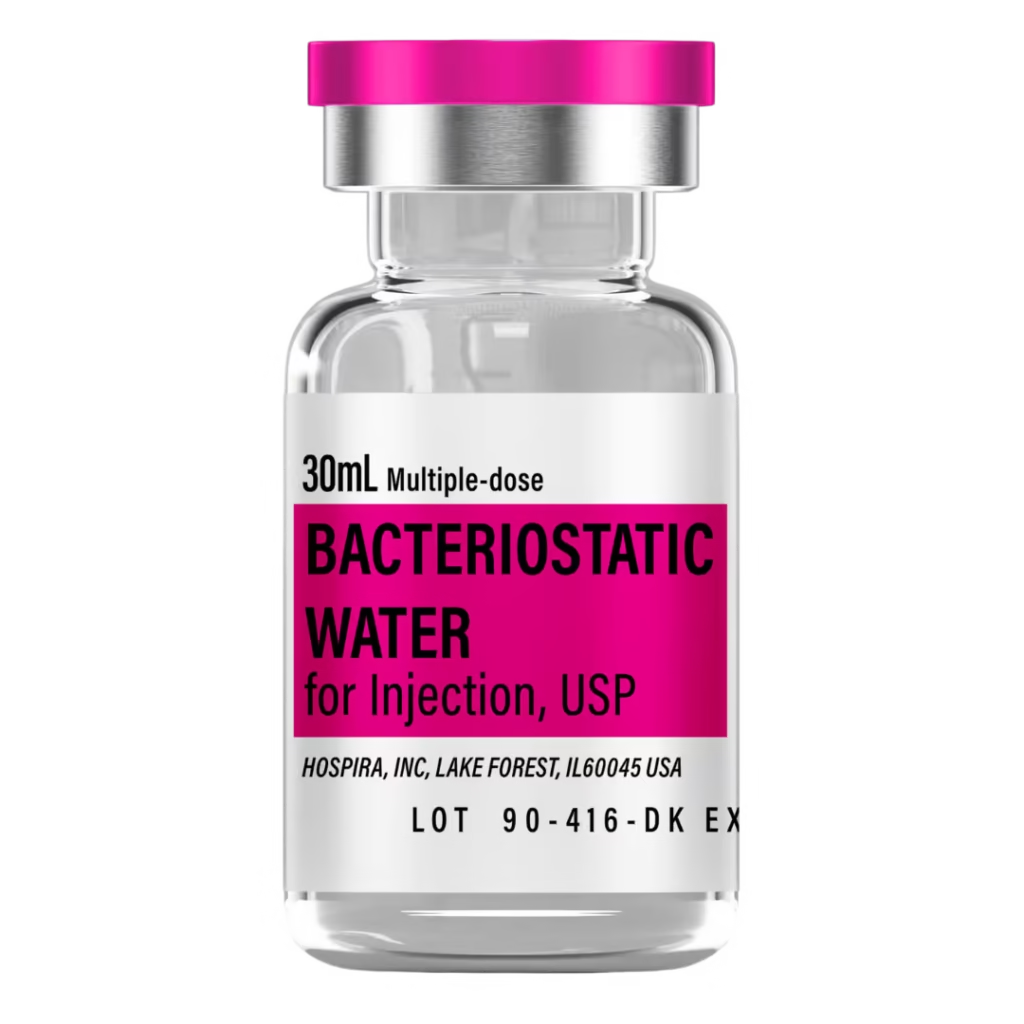
- Bacteriostatic Water (10 mL bottles): Use ~3.0 mL per vial for reconstitution.
- 8 weeks (3 vials): 9 mL → 1 × 10 mL bottle
- 12 weeks (5 vials): 15 mL → 2 × 10 mL bottles
- 16 weeks (6 vials): 18 mL → 2 × 10 mL bottles
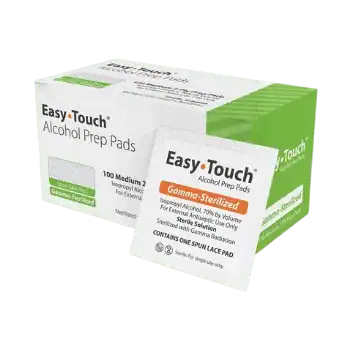
- Alcohol Swabs: One for the vial stopper + one for the injection site each day.
- Per week: 14 swabs (2/day)
- 8 weeks: 112 swabs → recommend 2 × 100‑count boxes
- 12 weeks: 168 swabs → recommend 2 × 100‑count boxes
- 16 weeks: 224 swabs → recommend 3 × 100‑count boxes
Protocol Overview
Concise summary of the once‑daily regimen.
- Goal: Support immune modulation and enhance host defense mechanisms[1][2].
- Schedule: Daily subcutaneous injections for 8–12 weeks (extend to 16 weeks if desired).
- Dose Range: 300–500 mcg daily with gradual titration.
- Reconstitution: 3.0 mL per 10 mg vial (~3.33 mg/mL) for accurate unit measurements.
- Storage: Lyophilized refrigerated or frozen; reconstituted refrigerated; use within 7 days.
Dosing Protocol
Suggested daily titration approach.
- Start: 300 mcg daily for Week 1 to assess tolerance.
- Target: 500 mcg daily from Week 2 onward.
- Frequency: Once per day (subcutaneous).
- Cycle Length: 8–12 weeks; optional extension to 16 weeks.
- Timing: Any consistent time; rotate injection sites.
Storage Instructions
Proper storage preserves peptide quality.
- Lyophilized (dry powder): Store at ≤−15 °C (5 °F); preferably ≤−50 °C (−58 °F) for long-term storage[5].
- Reconstituted: Refrigerate at 2–8 °C (35.6–46.4 °F); use within 3–4 weeks[6].
- Allow vials to reach room temperature before opening to minimize condensation uptake.
- Avoid repeated freeze–thaw cycles of reconstituted solutions.
Important Notes
Practical considerations for consistency and safety.
- Use new sterile insulin syringes; dispose in a sharps container.
- Rotate injection sites (abdomen, thighs, upper arms) to reduce local irritation.
- Inject slowly; wait a few seconds before withdrawing the needle.
- Document daily dose and site rotation to maintain consistency.
- Inspect solution before each use—do not use if cloudy or discolored.
How This Works
Thymosin Alpha-1 is a naturally occurring thymic peptide that modulates immune function through multiple pathways[1]. It enhances the maturation and differentiation of T‑cells, augments dendritic cell function, and promotes the production of key cytokines including interferon‑α and interleukin‑2[2][6]. Clinical studies have demonstrated Tα1’s ability to enhance immune responses in immunocompromised individuals, including those with chronic hepatitis B and C infections[4]. Meta-analyses have also shown benefit in reducing mortality in moderate-to-critical COVID-19 patients[3].
Potential Benefits & Side Effectsc
Observations from preclinical and clinical literature.
- Supports enhanced T‑cell function and overall immune competence[1][2].
- Demonstrates an excellent safety profile; doses up to 1.6 mg twice weekly for 6–12 months have been well-tolerated[4][7].
- Even at experimental doses up to 16 mg SC over 12 months, no significant Tα1‑specific toxicity has been observed[7].
- Most common adverse effect is mild injection‑site irritation (redness or discomfort).
Lifestyle Factors
Complementary strategies for best outcomes.
- Maintain adequate sleep and stress management to support immune function.
- Consume a nutrient‑dense diet rich in vitamins C, D, and zinc.
- Engage in moderate physical activity to complement immune optimization.
- Avoid excessive alcohol and smoking, which impair immune responses.
Important Note
This content is intended for therapeutic educational purposes only and does not constitute medical advice, diagnosis, or treatment.
References
World Journal of Virology
— Dominari et al. (2020): Comprehensive review of Thymosin Alpha-1 mechanisms, dosing (0.8–6.4 mg SC), and clinical applications
Molecules (MDPI)
— Tao et al. (2023): Thymosin Alpha-1 in viral diseases—mechanisms and therapeutic applications in HBV, HCV, and HIV
Inflammopharmacology
— Soeroto et al. (2023): Meta-analysis of Tα1 in COVID-19; significant mortality reduction in moderate-to-critical patients
Expert Opinion on Biological Therapy
— Thymalfasin (Zadaxin) clinical overview: 1.6 mg SC twice weekly for hepatitis B treatment
View Source
Annals of the New York Academy of Sciences
— Thymosin Alpha-1: biological activities, clinical applications, and pharmacokinetics review
Clinical Immunology
— Mechanisms of thymosin alpha-1 immunomodulation: T-cell maturation and cytokine production
FDA Peptide Advisory Committee (2024)
— Safety data: Tα1 doses up to 16 mg SC for 12 months showed no significant toxicity
View Source
Hospital Pharmacy
— Jordan et al. (2021): Small-volume injection accuracy; recommends ≥20% syringe capacity for precision
CDC
— Vaccine administration: subcutaneous route (angle/site; no aspiration required)
Johns Hopkins Arthritis Center
— How to give a subcutaneous injection: site selection, rotation, and technique
NCBI Bookshelf
— Best practices for injection: asepsis, preparation, site rotation, and administration
Additional Research and Background
These sources provide related context and are not presented as support for a specific statement above.
Subcutaneous Drug Injection Review (PMC)
— Pharmacologic considerations of the subcutaneous route
Related research, protocols, and guides
Explore the available research context, protocol variants or comparisons, and practical guides. When vial-size variants exist, they remain separate because vial strength, concentration, and syringe-unit calculations can differ. Related compounds and blends are comparisons only, not interchangeable.
Other vial-size protocols
Evidence: Dosing and safety sources are linked·Editorial standards & corrections