
Retatrutide (10 mg Vial) Dosage Protocol
- Table of Contents
- 5-Amino-1MQ Dosage Chart
- Dosing & Reconstitution Guide
- Subcutaneous Protocol (2 mL = 5 mg/mL)
- Reconstitution Steps
- Supplies Needed
- Protocol Overview
- Dosing Protocol
- Storage Instructions
- Important Notes
- How This Works
- Potential Benefits & Side Effects
- Lifestyle Factors
- Injection Technique
- References
- Additional Research and Background
Retatrutide Dosage Chart
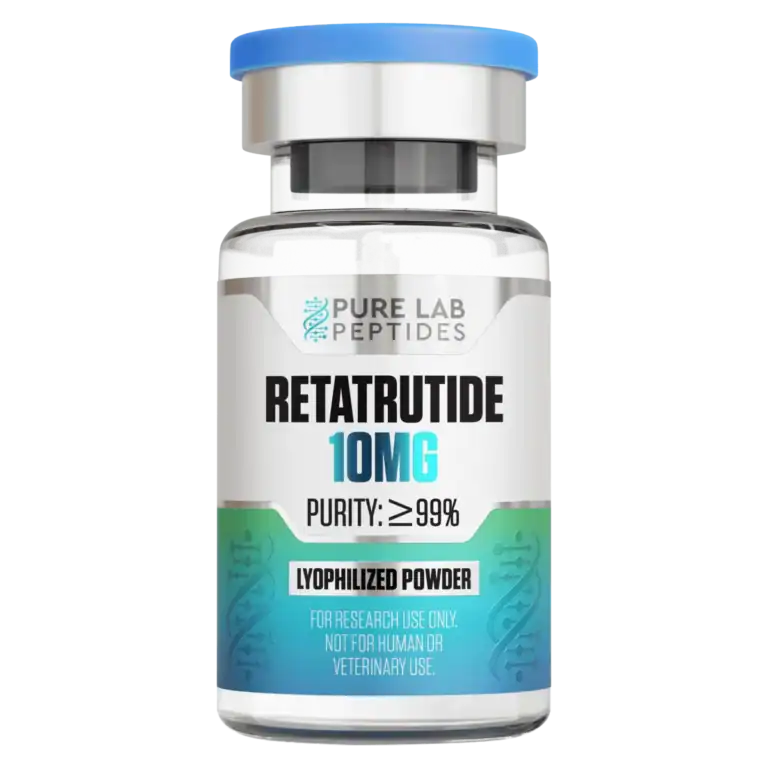
Retatrutide is dosed at 2 mg–8 mg weekly by subcutaneous injection in educational protocols, starting low and titrating monthly. A 10 mg vial reconstituted with bacteriostatic water yields about 10.0 mg/mL. This information is for research and educational use only.
- Reconstitute: Add 1.0 mL bacteriostatic water → ~10.0 mg/mL concentration.
- Typical weekly range: 2–8 mg once weekly (gradual escalation over 8–12 weeks).
- Easy measuring: At 10.0 mg/mL, 1 unit = 0.01 mL ≈ 100 mcg on a U-100 insulin syringe.
- Storage: Lyophilized: freeze at −20 °C (−4 °F); after reconstitution, refrigerate at 2–8 °C (35.6–46.4 °F) for up to 4 weeks.
Research context: For evidence on mechanisms, human and preclinical research, limitations, and safety, read Retatrutide Peptide: Benefits, Uses, Side Effects, Dosage, and Research.
Dosing & Reconstitution Guide
Educational guide for reconstitution and weekly dosing
Standard / Gradual Approach (1 mL = ~10.0 mg/mL)
Phase
Weekly Dose
Units (per injection) (mL)
Vials Needed
| Weeks 1–4 | 2 mg (2000 mcg) | 20 units (0.20 mL) | 1 vial per dose |
| Weeks 5–8 | 4 mg (4000 mcg) | 40 units (0.40 mL) | 1 vial per dose |
| Weeks 9–12 | 6 mg (6000 mcg) | 60 units (0.60 mL) | 1 vial per dose |
| Weeks 13+ | 8 mg (8000 mcg) | 80 units (0.80 mL) | 1 vial per dose |
Frequency: Inject once weekly subcutaneously[1][2]. All doses ≤10 mg can be drawn from one reconstituted 10 mg vial with 1.0 mL reconstitution. Volumes >1.0 mL may be split into 2 separate subcutaneous injections at different sites to ensure proper absorption[5].
Reconstitution Steps
- Draw 1.0 mL bacteriostatic water with a sterile syringe.
- Inject slowly down the vial wall; avoid foaming.
- Gently swirl/roll until dissolved (do not shake).
- Label with date and refrigerate at 2–8 °C (35.6–46.4 °F), protected from light.
- Use within 4 weeks of reconstitution[16].
Advanced / Aggressive Protocol (1 mL = ~10.0 mg/mL)
Phase
Weekly Dose
Units (per injection) (mL)
Vials Needed
| Weeks 1–4 | 2 mg (2000 mcg) | 20 units (0.20 mL) | 1 vial per dose |
| Weeks 5–8 | 4 mg (4000 mcg) | 40 units (0.40 mL) | 1 vial per dose |
| Weeks 9–12 | 8 mg (8000 mcg) | 80 units (0.80 mL) | 1 vial per dose |
| Weeks 13+ | 12 mg (12000 mcg) | 120 units (1.20 mL) | 2 vials per dose** |
Note: The 12 mg dose represents the highest dose tested in Phase 2 trials[3][4], producing maximum weight-loss efficacy (~24% body weight at 48 weeks). **The 12 mg dose requires reconstituting 2 vials (each with 1.0 mL); draw 1.20 mL total from the combined 2.0 mL and split into 2 injections at separate sites. Gradual titration is critical to minimize gastrointestinal side effects[6].
Important: This guide is for educational purposes only and is not medical advice. Retatrutide is not FDA-approved and is available only for research use. All dosing must follow trial protocols.
Supplies Needed
Plan based on a 12–24 week weekly protocol with gradual titration.
- Peptide Vials (Retatrutide, 10 mg each):
- 12 weeks (Standard to 6 mg): 5 vials
- 24 weeks (Standard to 8 mg): 15 vials
- 12 weeks (Aggressive to 8 mg): 6 vials
- Insulin Syringes (U-100, 1 mL capacity):
- Per week: 1–2 syringes (depending on dose; higher doses require split injections)
- 12 weeks: 12–24 syringes
- 24 weeks: 24–48 syringes
- Bacteriostatic Water (10 mL bottles): Use ~1.0 mL per vial for reconstitution.
- 12 weeks (5 vials): 5 mL → 1 × 10 mL bottle
- 24 weeks (15 vials): 15 mL → 2 × 10 mL bottles
- Alcohol Swabs: One for the vial stopper + one for each injection site.
- Per week: 2–4 swabs (1 per vial + 1–2 per injection site)
- 12 weeks: ~50 swabs → recommend 1 × 100-count box
- 24 weeks: ~100 swabs → recommend 1 × 100-count box
Protocol Overview
Concise summary of the once-weekly regimen.
- Goal: Support significant weight reduction and metabolic improvements through triple-receptor activation[1][7].
- Schedule: Weekly subcutaneous injections for 12–48 weeks (clinical trials ranged 36–48 weeks)[2].
- Dose Range: 2–12 mg weekly with gradual 4-week titration steps[3][4].
- Reconstitution: 1.0 mL per 10 mg vial (~10.0 mg/mL) for accurate unit measurements.
- Storage: Lyophilized frozen at −20 °C (−4 °F); reconstituted refrigerated at 2–8 °C (35.6–46.4 °F) for up to 4 weeks[16].
Dosing Protocol
Suggested weekly titration approach from clinical trials.
- Start: 2 mg weekly for 4 weeks to assess tolerance[6].
- Escalate: Increase by 2–4 mg every 4 weeks as tolerated.
- Target: 6–8 mg weekly (standard); 12 mg weekly (advanced/aggressive).
- Frequency: Once per week (subcutaneous), same day each week.
- Cycle Length: Minimum 24 weeks; trials extended to 48 weeks[3][4].
- Timing: Any consistent day/time; rotate injection sites with each dose.
Storage Instructions
Proper storage preserves peptide quality and stability.
- Lyophilized (dry powder): Store at ≤−15 °C (5 °F); preferably ≤−50 °C (−58 °F) for long-term storage[5].
- Reconstituted: Refrigerate at 2–8 °C (35.6–46.4 °F); use within 3–4 weeks[6].
- Allow vials to reach room temperature before opening to minimize condensation uptake.
- Avoid repeated freeze–thaw cycles of reconstituted solutions.
Important Notes
Practical considerations for consistency and safety.
- Use new sterile insulin syringes for each injection; dispose in a sharps container[14].
- Rotate injection sites (abdomen, thighs, upper arms) systematically to reduce local irritation and lipohypertrophy[13].
- For doses >10 mg with 1.0 mL reconstitution, prepare multiple vials to obtain the required volume.
- For volumes >1.0 mL, split into 2 separate injections at different sites for better absorption[5].
- Inject slowly; wait a few seconds before withdrawing the needle to ensure full dose delivery.
- Document weekly dose, date, and injection sites to maintain consistency.
- Gradual titration is essential to minimize gastrointestinal side effects; never skip escalation steps[6].
How This Works
Retatrutide’s unique mechanism of action stems from its triple-agonist design. By activating GLP-1 and GIP receptors, it enhances insulin secretion (when glucose is present) and suppresses appetite, similar to existing incretin therapies[7][8]. Additionally, Retatrutide’s glucagon receptor agonism raises metabolic rate and promotes energy expenditure, further amplifying fat burning and weight loss beyond GLP-1/GIP effects alone[7]. The peptide is engineered with a fatty-acid moiety to extend its circulation time (half-life ~6 days), allowing for once-weekly dosing[2]. The combined hormonal activation leads to reduced calorie intake, increased satiety, and enhanced lipid oxidation, yielding potent weight loss and glycemic control[8][9]. Preclinical studies confirmed that adding glucagon activity helps counteract the body’s adaptive slowing of metabolism during weight loss[7]. In essence, Retatrutide tackles three metabolic pathways at once, resulting in greater efficacy in lowering blood glucose and body fat than single- or dual-agonist therapies.
Clinical Benefits & Side Effects
Observations from Phase 2 human clinical trials.
Benefits
- Exceptional weight loss: Patients with obesity (without diabetes) lost an average of 22–24% of body weight at 48 weeks on 8–12 mg doses[3][4].
- Glycemic control: In type 2 diabetes patients, HbA1c dropped by 1.3–2.0% (from ~8.0% to ~6.0%) with 4–12 mg doses[1]; ~82% reached HbA1c ≤6.5%.
- Cardiometabolic improvements: Reductions in blood pressure, LDL cholesterol, waist circumference, and liver fat content (>80% resolution of hepatic steatosis on high doses)[10][11].
- Universal response: 100% of participants on 8–12 mg achieved at least 5% weight reduction[4].
Side Effects
- Gastrointestinal symptoms: Most common adverse effects were mild-to-moderate nausea, vomiting, and diarrhea, occurring primarily during dose escalation[6][12].
- Side effects were dose-dependent and transient; gradual titration (4-week intervals) significantly reduced GI discomfort compared to rapid escalation[6].
- No severe hypoglycemia or serious treatment-related adverse events reported in trials[1][2].
- Safety profile comparable to GLP-1 agonists when properly titrated[12].
Lifestyle Factors
Complementary strategies for optimal metabolic outcomes.
- Maintain a balanced, protein-forward diet with adequate micronutrients to support lean mass during weight loss.
- Combine resistance training (2–3×/week) with regular aerobic activity to preserve muscle and enhance metabolic adaptations.
- Prioritize sleep (7–9 hours) and stress management to support adherence and hormonal balance.
- Stay well-hydrated and monitor for signs of dehydration, especially during GI side effects.
- Work with healthcare providers to monitor metabolic markers (HbA1c, lipids, liver function) throughout the protocol.
Injection Technique
Subcutaneous injection guidance from clinical best-practice resources[13][14][15].
- Clean the vial stopper and injection site with alcohol; allow to dry completely.
- Pinch a skinfold; insert the needle at 45–90° into subcutaneous tissue[13].
- Do not aspirate for subcutaneous injections; inject slowly and steadily[13].
- For volumes >1.0 mL, split into 2 injections at different sites (e.g., left and right abdomen)[5].
- Rotate sites systematically (abdomen preferred; also thighs, upper arms) to avoid lipohypertrophy[14].
- Wait a few seconds after injecting before withdrawing needle to ensure full dose delivery.
- Dispose of used syringes immediately in an FDA-approved sharps container[14].
Important Note
This content is intended for therapeutic educational purposes only and does not constitute medical advice, diagnosis, or treatment. Retatrutide is not FDA-approved and is available only for research purposes. All information presented is based on published clinical trial data and is not intended to encourage off-label use.
References
The Lancet (2023)
— Rosenstock J, et al. Retatrutide for type 2 diabetes: Phase 2 trial results (36-week study, HbA1c reductions, weight loss)
New England Journal of Medicine (2023)
— Jastreboff AM, et al. Triple-hormone-receptor agonist Retatrutide for obesity: Phase 2 trial (48-week study, up to 24% weight loss)
American Diabetes Association (2023)
— ADA Press Release: Novel agent Retatrutide results in substantial weight reduction (83rd Scientific Sessions, Phase 2 data)
ADA Meeting News (2023)
— Phase 2 trial results: benefits of Retatrutide in obesity, type 2 diabetes, NASH (83rd ADA Scientific Sessions coverage)
ClinicalTrials.gov
— Study of Retatrutide (LY3437943) in adults with obesity (NCT04881760; protocol details, dosing regimens)
Current Obesity Reports (2025)
— Hamza M, et al. Triple agonism based therapies for obesity (review; titration strategies, GI side effect management)
Cell Metabolism (2022)
— Coskun T, et al. LY3437943 (Retatrutide): discovery to clinical proof of concept (triple GLP-1/GIP/glucagon agonist, preclinical mechanism)
Nature Reviews Endocrinology (2024)
— Multi-receptor agonists for metabolic disease (mechanism of GLP-1/GIP/glucagon co-activation)
View Source
Diabetes Care (2024)
— Incretin-based therapies: GLP-1, GIP, and glucagon receptor pharmacology (metabolic pathways, energy expenditure)
NEJM (2023) — Supplementary Material
— Jastreboff et al. obesity trial: cardiometabolic markers, liver fat reduction, lipid profiles
Hepatology (2024)
— Triple agonists in NAFLD/NASH: hepatic steatosis resolution (preclinical and clinical evidence)
The Lancet (2023) — Supplementary Data
— Rosenstock et al. diabetes trial: adverse event profiles, GI tolerability, titration schedules
CDC
— Vaccine administration: subcutaneous route (angle/site guidance; no aspiration required)
Johns Hopkins Arthritis Center
— How to give a subcutaneous injection (technique, site rotation, sharps disposal)
NCBI Bookshelf
— Administration of medication: subcutaneous injections (aseptic technique, preparation)
GenScript Peptide Services
— Peptide storage and handling guidelines (lyophilized and reconstituted storage conditions, stability)
Journal of Pharmaceutical Sciences (2018)
— Stability of peptides during freeze-thaw cycles (best practices for aliquoting and storage)
Additional Research and Background
These sources provide related context and are not presented as support for a specific statement above.
Pure Lab Peptides
— Retatrutide (10 mg) product page (quality specifications, batch documentation, supplier information)
View Source
Related research, protocols, and guides
Explore the available research context, protocol variants or comparisons, and practical guides. When vial-size variants exist, they remain separate because vial strength, concentration, and syringe-unit calculations can differ. Related compounds and blends are comparisons only, not interchangeable.
Evidence: Dosing and safety sources are linked·Editorial standards & corrections