
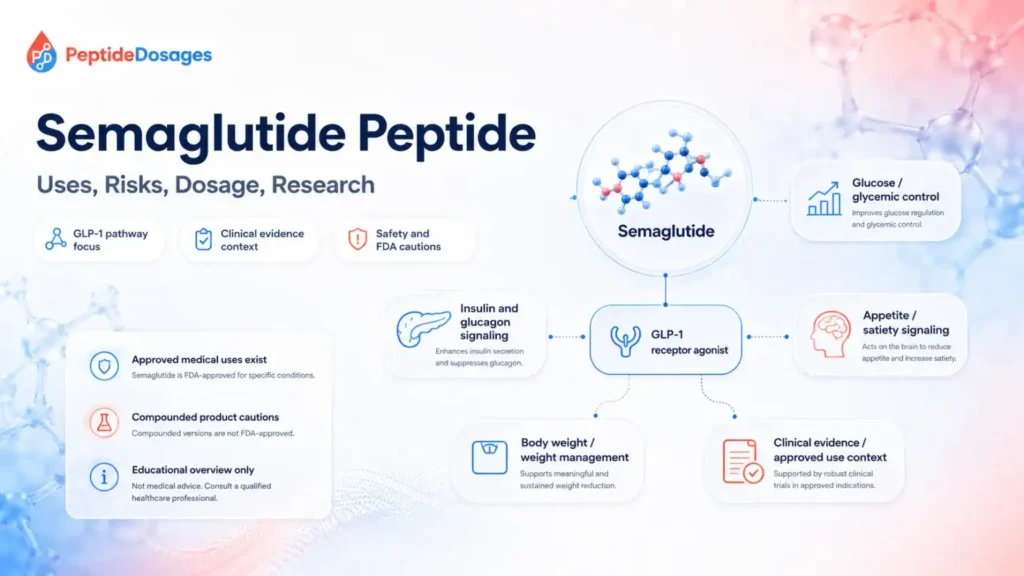
Semaglutide peptide is a modified glucagon-like peptide-1 receptor agonist used in prescription medicines for type 2 diabetes and chronic weight management, depending on product, dose, and jurisdiction 1, 2, 3. This educational article explains how semaglutide works, what clinical trials show, what side effects and safety warnings matter, and how dosage information should be interpreted from approved labels and published studies. It is not personal medical advice, and decisions about semaglutide treatment should be made with a licensed clinician.
- Semaglutide is a long-acting GLP-1 receptor agonist designed from the glucagon-like peptide-1 pathway, with structural changes that extend its half-life compared with native human GLP-1 6, 7.
- FDA-approved semaglutide products include injectable and oral formulations for specific indications, including type 2 diabetes and chronic weight management in eligible adults and adolescents, depending on the product label 2, 3, 4.
- Semaglutide works mainly through GLP-1 receptor signaling that affects glucose-dependent insulin secretion, glucagon suppression, appetite, satiety, and gastric emptying 2, 3, 8.
- Clinical trials have reported improvements in A1C, body weight, and selected cardiovascular outcomes, but results depend on study population, dose, duration, and comparator 9, 10, 13.
- Common adverse effects are gastrointestinal, including nausea, vomiting, diarrhea, constipation, and abdominal pain; serious risks and warnings include pancreatitis, gallbladder disease, kidney injury, hypoglycemia when combined with insulin secretagogues or insulin, and a boxed warning about thyroid C-cell tumors 2, 3, 4.
- Dosage information in this article reflects FDA labels or clinical-trial context only; study doses should not be interpreted as personal dosing advice 2, 3, 4.
- Compounded semaglutide, semaglutide sodium, semaglutide acetate, dosing errors, and counterfeit or unapproved GLP-1 products raise quality and safety concerns noted by FDA communications 5, 20.
Related dosage pages: For vial-specific concentration, reconstitution, and measurement examples, see Semaglutide (5 mg Vial) Dosage Protocol, Semaglutide (10 mg Vial) Dosage Protocol, and Semaglutide (20 mg Vial) Dosage Protocol. Each linked protocol remains a separate reference because vial strength changes concentration and syringe-unit calculations.
Fast Answer
Semaglutide peptide is a long-acting GLP-1 receptor agonist used in approved prescription medicines for type 2 diabetes, chronic weight management, and certain cardiovascular risk-reduction indications, depending on the product label 2, 3, 4. People search for it because clinical trials show effects on blood sugar, appetite, body weight, and cardiovascular outcomes in defined populations 9, 13. Safety matters: semaglutide can cause gastrointestinal side effects and has important warnings, contraindications, interaction concerns, and regulatory cautions, especially around compounded or unapproved products 2, 5.
What Is the Semaglutide Peptide?
Semaglutide is a synthetic GLP-1 analogue. It is based on glucagon-like peptide-1, an incretin hormone involved in blood sugar regulation, appetite signaling, and gastrointestinal physiology 6, 8. In approved medicines, semaglutide is the active ingredient in prescription products such as Ozempic, Wegovy, and Rybelsus, each with its own labeled indication, formulation, and dosage schedule 2, 3, 4.
The term “semaglutide peptide” is common in search behavior, but semaglutide should not be confused with unapproved “research peptide” products sold outside regulated prescription channels. Approved semaglutide medications are reviewed for specific indications, manufacturing standards, labeling, safety information, and dosing instructions 2, 3, 4.
What Peptide Classification Does Semaglutide Have?
Semaglutide is classified pharmacologically as a GLP-1 receptor agonist and structurally as a peptide-based drug derived from the GLP-1 hormone pathway 1, 6. Native human GLP-1 is rapidly degraded by dipeptidyl peptidase-4, while semaglutide was designed to resist enzymatic degradation and bind albumin, which supports once-weekly dosing for injectable formulations 6, 7.
How Semaglutide Differs From Human GLP-1
Human GLP-1 has a short biological half-life, which limits its use as a direct medication 8. Semaglutide includes amino acid substitutions and a fatty-acid side chain that increase DPP-4 resistance and albumin binding, extending the half-life of semaglutide to about one week in label descriptions and pharmacology reviews 2, 6, 7.
Therapeutic Context in Diabetes and Obesity Care
Semaglutide is discussed most often in relation to diabetes and obesity because GLP-1 receptor activation can affect glycemic control, appetite, and body weight in defined clinical settings 2, 3, 8. The treatment of type 2 diabetes and chronic weight management are approved-label contexts for different semaglutide products, while other uses should be separated from established indications and evaluated by evidence quality 2, 3, 18.
Semaglutide as a GLP-1 Receptor Agonist and Peptide Drug
Semaglutide is a glucagon-like peptide-1 receptor agonist, meaning it activates the GLP-1 receptor rather than simply increasing endogenous GLP-1 levels 2, 8. GLP-1 receptor agonists are part of a broader medication class that also includes liraglutide, dulaglutide, exenatide, and lixisenatide, although each drug differs in structure, formulation, pharmacokinetics, clinical-trial evidence, and labeling 6, 14.
GLP-1 Receptor and Incretin Hormone Pathway
GLP-1 is an incretin hormone released from the gut after food intake, and it helps coordinate insulin secretion, glucagon suppression, gastric emptying, and appetite signaling 8. Semaglutide activates the GLP-1 receptor, a receptor found in tissues relevant to metabolism, including pancreatic beta cells and central appetite pathways 2, 8.
Why the Half-Life of Semaglutide Matters
The half-life of semaglutide supports once-weekly subcutaneous semaglutide administration for Ozempic and Wegovy, while oral semaglutide is formulated for daily use because absorption through the gastrointestinal tract is limited and formulation-dependent 2, 3, 4. Half-life and route of administration matter because they affect clinical dosing schedules, pharmacokinetics, adherence, and how trial results are interpreted 6, 7.
How Does Semaglutide Peptide Work?
Semaglutide works by activating GLP-1 receptors in a way that mimics some actions of endogenous GLP-1, but with longer activity 2, 6. The main clinical effects relate to glucose-dependent insulin secretion, lower glucagon secretion when glucose is elevated, delayed gastric emptying, and increased satiety 2, 3, 8.
How Semaglutide Works in Appetite and Energy Homeostasis
In weight management studies, semaglutide is thought to promote weight loss partly by reducing appetite, increasing satiety, and lowering energy intake 3, 9. This does not mean weight reduction is automatic or identical for everyone; clinical outcomes vary by dose, duration, adherence, baseline body weight, diet and exercise support, adverse effects, and medical context 9, 21.
Effects on Insulin, Glucagon, and Glucose Regulation
In patients with type 2 diabetes, GLP-1 receptor agonism can improve blood sugar regulation by increasing glucose-dependent insulin secretion and reducing inappropriately elevated glucagon secretion 2, 8. Because the effect is glucose-dependent, semaglutide alone has a lower intrinsic hypoglycemia risk than insulin or sulfonylureas, but hypoglycemia risk increases when semaglutide is used with those medications 2, 4.
Mechanism of Action: GLP-1 Receptor Signaling and Metabolic Effects
The mechanism of action connects semaglutide’s receptor activity to clinical outcomes. Mechanism alone, however, does not prove benefit for every claimed use; clinical trials are needed to determine whether a biologically plausible effect leads to meaningful outcomes in humans 8, 18.
How GLP-1 Receptor Binding Affects Beta Cells
GLP-1 receptor activation in pancreatic beta cells supports glucose-dependent insulin secretion, which is relevant to glycemic control in type 2 diabetes mellitus 2, 8. This pathway helps explain why semaglutide has been studied for control in type 2 diabetes, but individual treatment decisions depend on diagnosis, comorbidities, other medications, contraindications, and clinician judgment 18.
Gastric Emptying, Satiety Signals, and Gastrointestinal Physiology
Semaglutide can delay gastric emptying, especially early in treatment, and this may contribute to satiety and gastrointestinal adverse effects 2, 3. Delayed gastric emptying is also relevant to medication absorption and to patients with severe gastrointestinal disease, including gastroparesis, which is addressed in labeling cautions 2, 3.
What Is Semaglutide Used For?
Semaglutide use depends on the product. Ozempic is labeled for adults with type 2 diabetes to improve glycemic control and reduce the risk of major adverse cardiovascular events in adults with type 2 diabetes and established cardiovascular disease 2. Wegovy is labeled for chronic weight management in adults and pediatric patients aged 12 years and older with obesity, and for reducing risk of major adverse cardiovascular events in adults with established cardiovascular disease and either obesity or overweight, according to labeling updates 3.
FDA-Approved Uses for Type 2 Diabetes
Ozempic and Rybelsus are FDA-approved semaglutide products used with diet and exercise to improve glycemic control in adults with type 2 diabetes 2, 4. Ozempic also has a labeled cardiovascular risk-reduction indication in adults with type 2 diabetes and established cardiovascular disease 2.
Chronic Weight Management in Adults With Obesity or Overweight
Wegovy is an FDA-approved semaglutide injection for chronic weight management in adults with obesity or overweight with at least one weight-related condition, when used with a reduced-calorie diet and increased physical activity 3. Wegovy is also labeled for weight management in adolescents aged 12 years and older with obesity 3.
Cardiovascular Risk Reduction and Labeled Outcomes
Semaglutide and cardiovascular outcomes have been studied in multiple populations. SUSTAIN-6 found fewer first major adverse cardiovascular events with semaglutide versus placebo in adults with type 2 diabetes at high cardiovascular risk, while SELECT reported fewer major adverse cardiovascular events with semaglutide 2.4 mg in adults with established cardiovascular disease and overweight or obesity without diabetes 11, 13.
Potential Benefits of Semaglutide Peptide
Potential benefits of semaglutide peptide should be interpreted by evidence category. The strongest claims are those reflected in approved labeling or supported by large randomized clinical trials; weaker claims should be treated as preliminary, mechanistic, preclinical, or unsupported 2, 3, 9.
What Evidence Shows About Weight Loss and Body Weight
In the STEP 1 clinical trial, adults with overweight or obesity without diabetes who received semaglutide 2.4 mg once weekly plus lifestyle intervention had greater mean body weight reduction than placebo over 68 weeks 9. In STEP 2, adults with type 2 diabetes and overweight or obesity also had greater weight reduction with semaglutide 2.4 mg than placebo, although weight loss was generally smaller than in trials excluding diabetes 10.
How Semaglutide Promotes Weight Loss in Clinical Trials
Semaglutide promotes weight loss in clinical trials through appetite and satiety effects linked to GLP-1 receptor activation, alongside study-specific lifestyle interventions such as diet and exercise counseling 3, 9, 21. These findings do not establish a guaranteed result for an individual patient, and stopping treatment can be associated with weight regain in extension studies 22.
Blood Sugar, A1C, and Diabetes Management Outcomes
Semaglutide has shown A1C reductions in adults with type 2 diabetes across SUSTAIN and PIONEER clinical trial programs 2, 4, 15. In SUSTAIN 7, once-weekly semaglutide produced greater A1C and body-weight reductions than dulaglutide at studied doses, but trial results should be interpreted within the studied population and protocol 14.
What Does Human Research Show About Semaglutide?
Human evidence for semaglutide is unusually extensive compared with many peptides discussed online. It includes FDA-reviewed prescribing information, randomized clinical trials, cardiovascular outcomes trials, and clinical-practice guidelines for diabetes management 2, 3, 11, 18.
STEP, SUSTAIN, and PIONEER Clinical Trial Programs
The STEP program studied semaglutide 2.4 mg for weight management, the SUSTAIN program studied injectable semaglutide in type 2 diabetes, and the PIONEER program studied oral semaglutide in type 2 diabetes 9, 10, 14, 15. These programs are not interchangeable because they used different formulations, populations, endpoints, comparators, and doses.
Semaglutide Versus Placebo, Liraglutide, and Tirzepatide
Semaglutide versus placebo trials generally showed greater weight reduction and glycemic improvement with semaglutide in studied populations 9, 10. PIONEER 4 compared oral semaglutide with liraglutide and placebo in adults with type 2 diabetes, while newer trials of tirzepatide show that semaglutide and tirzepatide differ mechanistically because tirzepatide activates both GIP and GLP-1 receptors 15, 16.
| Evidence Area | What Has Been Studied | Evidence Level | What It Can and Cannot Show |
|---|---|---|---|
| Type 2 diabetes | Injectable and oral semaglutide for glycemic control in adults with type 2 diabetes 2, 4 | Approved / Clinical | Supports labeled use; does not determine suitability for every patient. |
| Chronic weight management | Semaglutide 2.4 mg with lifestyle intervention in obesity or overweight 3, 9 | Approved / Clinical | Supports population-level benefit; individual outcomes vary. |
| Cardiovascular outcomes | SUSTAIN-6 and SELECT evaluated major adverse cardiovascular events 11, 13 | Approved / Clinical | Supports selected labeled cardiovascular indications; not all populations are covered. |
| Preclinical mechanisms | GLP-1 receptor pharmacology, beta-cell effects, appetite pathways 6, 8 | Preclinical / Mechanistic | Explains plausibility; does not replace clinical outcomes. |
| Online “rapid results” claims | Anecdotal reports outside trial protocols | Unsupported | Cannot establish efficacy, dosing, safety, or long-term risk. |
Full View
Preclinical and Mechanistic Research on the GLP-1 Analogue Semaglutide
Preclinical and mechanistic work helped explain why analogue semaglutide could act longer than native GLP-1 and support metabolic effects 6, 7. These studies are useful for pharmacology but should not be used alone to justify unapproved or unsupervised use.
What Animal and Cell Models Can Tell Researchers
Animal and cell models can help researchers study GLP-1 receptor signaling, beta-cell function, gastric emptying pathways, and appetite circuitry 6, 8. Preclinical findings can also guide drug design, such as modifications to the peptide backbone that improve DPP-4 resistance and albumin binding 7.
Translational Limits of Preclinical Metabolic Findings
Preclinical evidence cannot show whether a drug improves A1C, reduces body weight, or lowers cardiovascular event risk in real patients. Those questions require human studies, and semaglutide’s strongest claims come from clinical trials and approved labeling rather than animal or in vitro findings 2, 3, 9, 13.
Evidence Limitations and Unsupported Online Claims
Semaglutide has stronger evidence than many peptides discussed on wellness sites, but not every claim is equally supported. Claims about “rapid fat loss,” “metabolic reset,” or guaranteed sustained weight loss often overreach beyond what trials and labels establish 3, 9, 22.
Where Clinical Evidence Is Stronger or Weaker
Evidence is strongest for labeled uses: type 2 diabetes, chronic weight management in eligible populations, and specified cardiovascular risk-reduction indications 2, 3, 4. Evidence is weaker when semaglutide is discussed for populations not represented in trials, unapproved combinations, nonstandard dosing, cosmetic weight loss, or compounded products not reviewed by FDA for safety, efficacy, or quality 5, 20.
Claims About Rapid Fat Loss or Guaranteed Results
Clinical studies report averages and ranges, not guaranteed individual outcomes 9, 10. Weight loss can be affected by tolerability, dose escalation, baseline metabolic health, concurrent medications, diet and exercise, adherence, and whether treatment is continued 21, 22.
Why Anecdotal Reports Cannot Replace Clinical Trial Data
Anecdotal reports do not control for placebo effects, diet changes, other medications, baseline risk, reporting bias, or adverse events. Clinical trials, labels, and pharmacovigilance systems provide more reliable evidence for efficacy and safety than social media or vendor claims 2, 3, 20.
Side Effects and Adverse Effects Reported With Semaglutide
Semaglutide’s most common adverse effects are gastrointestinal, and they are reflected consistently in approved prescribing information and clinical trials 2, 3, 4. Safety interpretation should consider indication, formulation, dose, titration, comorbidities, and interacting medications.
Common Gastrointestinal Side Effects: Nausea, Diarrhea, and Constipation
Label-reported adverse reactions include nausea, vomiting, diarrhea, abdominal pain, and constipation 2, 3, 4. These adverse effects are often related to GLP-1 effects on gastrointestinal physiology and can contribute to treatment discontinuation in some patients 3, 9.
Serious Adverse Events That Require Medical Attention
Serious safety concerns in labeling include pancreatitis, gallbladder disease, acute kidney injury, hypersensitivity reactions, increased heart rate for Wegovy, and diabetic retinopathy complications in patients with type 2 diabetes in certain contexts 2, 3, 4. Semaglutide labels also include a boxed warning about thyroid C-cell tumors based on rodent findings and contraindicate use in people with a personal or family history of medullary thyroid carcinoma or multiple endocrine neoplasia syndrome type 2 2, 3, 4.
Side-Effect Severity, Titration, and Treatment Discontinuation
Approved labels use gradual dose escalation to reduce gastrointestinal adverse reactions, but this is label context rather than personal dosing advice 2, 3, 4. In trials, gastrointestinal side effects were among the most common reasons for discontinuation, underscoring the need for clinician monitoring and individualized risk assessment 3, 9.
Safety Risks, Contraindications, and Warnings
Safety risks should be evaluated before semaglutide treatment begins and reassessed during therapy. This is especially important for people with prior pancreatitis, gallbladder disease, kidney disease, severe gastrointestinal disorders, diabetic retinopathy, pregnancy considerations, or medications that can cause hypoglycemia 2, 3, 4.
Boxed Warning and Thyroid C-Cell Tumor Risk Context
Semaglutide products carry a boxed warning about thyroid C-cell tumors observed in rodents, and the human relevance of that finding is not known 2, 3, 4. The labels contraindicate semaglutide in patients with personal or family history of medullary thyroid carcinoma or multiple endocrine neoplasia syndrome type 2 2, 3, 4.
Pancreatitis, Gallbladder Disease, Kidney Injury, and Gastroparesis
Prescribing information warns clinicians to monitor for pancreatitis symptoms and to consider gallbladder disease and acute kidney injury risk, particularly when severe vomiting or dehydration occurs 2, 3, 4. Because semaglutide delays gastric emptying, labeling advises caution in patients with severe gastrointestinal disease, including severe gastroparesis 2, 3.
Pregnancy, Breastfeeding, and Reproductive Planning Considerations
Semaglutide labels advise discontinuation before a planned pregnancy because of the drug’s long washout period and potential fetal risk based on animal data 2, 3, 4. Breastfeeding and reproductive planning should be discussed with a clinician because product labels differ by formulation and available human data are limited 2, 3, 4.
Drug Interactions and Medical Context for Semaglutide Treatment
Semaglutide is not evaluated in isolation during clinical care. Drug interactions, comorbidities, and co-prescribed therapies can change risk and monitoring needs 2, 4, 18.
Hypoglycemia Risk With Insulin or Sulfonylureas
Semaglutide can increase hypoglycemia risk when used with insulin or insulin secretagogues such as sulfonylureas 2, 4. Labels note that clinicians may consider reducing doses of those agents when starting semaglutide, but that decision is individualized and belongs in medical care, not self-directed dosing 2, 4.
Delayed Gastric Emptying and Oral Medication Absorption
Because semaglutide delays gastric emptying, it may affect absorption of orally administered medications 2, 4. Oral semaglutide also has specific administration requirements in its label because absorption is sensitive to timing, water volume, and food intake, but this article does not provide procedural instructions 4.
Dosage and Administration Information From Labels and Studies
Dosage information should be read as approved-label or clinical-trial context. It is not a recommendation for any individual reader, and study doses should not be interpreted as personal dosing advice.
FDA Label Dosing Context for Ozempic, Wegovy, and Rybelsus
FDA labeling describes different semaglutide dosage schedules by product and indication. Ozempic is a once-weekly subcutaneous semaglutide injection for type 2 diabetes with dose escalation from an initial nontherapeutic starting dose to maintenance doses described in the label 2. Wegovy is a once-weekly subcutaneous product titrated toward chronic weight management maintenance dosing, and Rybelsus is oral semaglutide taken daily according to its prescribing information 3, 4.
| Product | Route in Approved Label | General Label Context | Not Personal Advice |
|---|---|---|---|
| Ozempic | Subcutaneous injection | Type 2 diabetes glycemic control; cardiovascular risk reduction in specified adults 2 | Dosing decisions require prescribing clinician oversight. |
| Wegovy | Subcutaneous injection | Chronic weight management and specified cardiovascular risk reduction contexts 3 | Label titration is not a self-use protocol. |
| Rybelsus | Oral tablet | Adults with type 2 diabetes for glycemic control 4 | Oral administration details should be followed only under prescribing guidance. |
Full View
Semaglutide Injection, Oral Semaglutide, and Subcutaneous Semaglutide Context
Forms of semaglutide differ in route, absorption, and label instructions. Subcutaneous semaglutide includes once-weekly products, while oral semaglutide uses an absorption enhancer and daily administration because peptide drugs are usually poorly absorbed in the gastrointestinal tract 4, 6, 7.
Regulatory Status, Compounded Semaglutide, and Clinician Discussion Points
Regulatory status matters because approved products and unapproved products are not evaluated the same way. FDA-approved semaglutide products have reviewed labeling, defined indications, manufacturing standards, and pharmacovigilance expectations; compounded or counterfeit products do not carry the same assurance 2, 3, 5, 20.
Is Semaglutide Peptide FDA-Approved?
Semaglutide is FDA-approved as the active ingredient in specific prescription medicines, including Ozempic, Wegovy, and Rybelsus, but approval is product-specific and indication-specific 2, 3, 4. The European Medicines Agency has also authorized semaglutide products for defined indications in Europe, although labeling and availability can differ by jurisdiction 19.
Compounded Semaglutide, Semaglutide Sodium, and Semaglutide Acetate Cautions
FDA has warned about unapproved GLP-1 products used for weight loss, including compounded semaglutide concerns, reports of dosing errors, and the use of semaglutide salt forms such as semaglutide sodium and semaglutide acetate that are not the same active ingredient as approved semaglutide products 5, 20. FDA also notes that compounded drugs are not FDA-approved and are not reviewed for safety, effectiveness, or quality before marketing 5.
Questions to Discuss With a Clinician Before Using Semaglutide
Readers considering semaglutide-related medical decisions can use this checklist for clinician discussion:
- Which indication applies: type 2 diabetes, chronic weight management, cardiovascular risk reduction, or another context?
- Which product and formulation are being considered: Ozempic, Wegovy, Rybelsus, or another regulated option?
- What medical history matters, including pancreatitis, gallbladder disease, kidney disease, gastroparesis, diabetic retinopathy, thyroid cancer history, pregnancy plans, or breastfeeding?
- Which medications could interact, especially insulin, sulfonylureas, or drugs affected by delayed gastric emptying?
- What adverse effects should be monitored, and when should urgent care be sought?
- Is the product FDA-approved for the intended use, or is it compounded, off-label, investigational, or unapproved?
- What alternatives, including lifestyle therapy and other approved medications, are appropriate?
The safest way to interpret semaglutide peptide information is through evidence quality, regulatory status, safety data, and clinician-guided decision-making. The strongest conclusions come from approved labeling and well-designed human studies; weaker online claims should be treated cautiously.
Related dosage protocols and research
Use the available links to move between research context, dosage pages or comparisons, and supporting guides. When vial-size variants exist, they remain separate because concentration and syringe-unit calculations change with vial strength. Comparisons do not imply that different compounds are interchangeable.
Matching dosage protocols
- Semaglutide (5 mg Vial) Dosage Protocol
- Semaglutide (10 mg Vial) Dosage Protocol
- Semaglutide (20 mg Vial) Dosage Protocol
Related protocols and comparisons
Further research context
- Tirzepatide Peptide: Benefits, Uses, Side Effects, Dosage, and Research
- Retatrutide Peptide: Benefits, Uses, Side Effects, Dosage, and Research
- Mazdutide Peptide: Benefits, Uses, Side Effects, Dosage, and Research
Core guides
References
PubChem Compound Summary for Semaglutide
pubchem.ncbi.nlm.nih.gov
1
Ozempic Prescribing Information
novo-pi.com
2
Wegovy Prescribing Information
novo-pi.com
3
Rybelsus Prescribing Information
novo-pi.com
4
FDA’s Concerns with Unapproved GLP-1 Drugs Used for Weight Loss
fda.gov
5
The Discovery and Development of Liraglutide and Semaglutide
frontiersin.org
6
Discovery of the Once-Weekly Glucagon-Like Peptide-1 Analogue Semaglutide
doi.org
7
Mechanisms of Action and Therapeutic Application of Glucagon-like Peptide-1
doi.org
8
Once-Weekly Semaglutide in Adults with Overweight or Obesity
doi.org
9
Semaglutide 2.4 mg Once a Week in Adults with Overweight or Obesity and Type 2 Diabetes
doi.org
10
Semaglutide and Cardiovascular Outcomes in Patients with Type 2 Diabetes
doi.org
11
Oral Semaglutide and Cardiovascular Outcomes in Patients with Type 2 Diabetes
doi.org
12
Semaglutide and Cardiovascular Outcomes in Obesity without Diabetes
doi.org
13
Semaglutide versus Dulaglutide Once Weekly in Patients with Type 2 Diabetes
doi.org
14
Oral Semaglutide versus Subcutaneous Liraglutide and Placebo in Type 2 Diabetes
doi.org
15
Tirzepatide Once Weekly for the Treatment of Obesity
doi.org
16
SELECT Trial: Semaglutide Effects on Cardiovascular Outcomes in People With Overweight or Obesity
clinicaltrials.gov
17
Pharmacologic Approaches to Glycemic Treatment: Standards of Care in Diabetes—2024
doi.org
18
Wegovy European Public Assessment Report
ema.europa.eu
19
FDA Alerts Health Care Professionals and Compounders of Dosing Errors Associated with Compounded Injectable Semaglutide Products
fda.gov
20
Effect of Subcutaneous Semaglutide vs Placebo as an Adjunct to Intensive Behavioral Therapy on Body Weight
doi.org
21
Effect of Continued Weekly Subcutaneous Semaglutide vs Placebo on Weight Loss Maintenance in Adults With Overweight or Obesity
doi.org
22
Researchers Cited in This Article
The researchers below authored or co-authored publications cited in this article. Listing them here identifies sources; it does not mean they wrote, independently reviewed, sponsored, or endorsed this PeptideDosages.com article. The site author is identified in the article byline.
Daniel J. Drucker
Researcher profile: Sinai Health Profile
Daniel J. Drucker’s published work is central to understanding glucagon-like peptide-1 biology, incretin pathway pharmacology, and GLP-1 receptor signaling. His publications provide useful scientific context for interpreting the mechanism of action behind semaglutide peptide and related incretin-based therapies. This work is especially relevant to discussions of receptor pathway activity, glucose-dependent insulin secretion, glucagon regulation, gastric emptying, and the distinction between mechanistic plausibility and clinical evidence.
Selected publications:
- Mechanisms of Action and Therapeutic Application of Glucagon-like Peptide-1 — Cell Metabolism, 2018. DOI: 10.1016/j.cmet.2018.03.009
- The Incretin System: Glucagon-like Peptide-1 Receptor Agonists and Dipeptidyl Peptidase-4 Inhibitors in Type 2 Diabetes — The Lancet, 2006. DOI: 10.1016/S0140-6736(06)69705-5
Melanie J. Davies
Researcher profile: University of Leicester Profile
Melanie J. Davies has authored clinical studies relevant to semaglutide research in type 2 diabetes, obesity, and weight-management trial populations. Her work helps frame how semaglutide outcomes should be interpreted through randomized clinical studies rather than anecdotal reports. The selected publications are especially relevant to the article’s discussion of clinical evidence, trial populations, efficacy, safety interpretation, and the importance of separating approved-label or study-based findings from individual medical decisions.
Selected publications:
- Once-Weekly Semaglutide in Adults with Overweight or Obesity — New England Journal of Medicine, 2021. DOI: 10.1056/NEJMoa2032183
- Semaglutide 2.4 mg Once a Week in Adults with Overweight or Obesity and Type 2 Diabetes — The Lancet, 2021. DOI: 10.1016/S0140-6736(21)00213-0
Evidence: Claim-level sources are linked·Editorial standards & correctionsPrevious ArticleSemax Peptide: Benefits, Uses, Side Effects, Dosage, and ResearchNext ArticleWhat is MGF? A Clear Guide to Mechano Growth Factor (MGF)